Cost guide
Backyard Turf Cost in 2026: What Your Yard Size Actually Adds Up To
Backyard turf costs $8 to $22 per square foot installed in 2026, most often $12 to $15. See the whole-project total for 500, 1,000, and 1,500 square foot yards, with what changes the number.
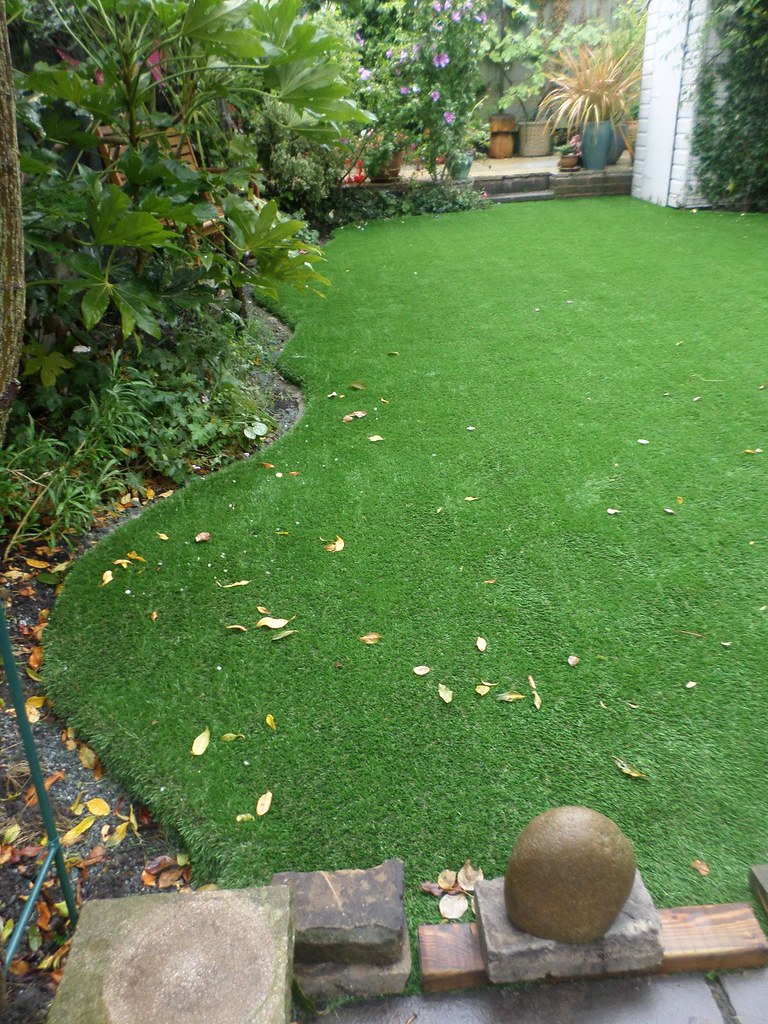
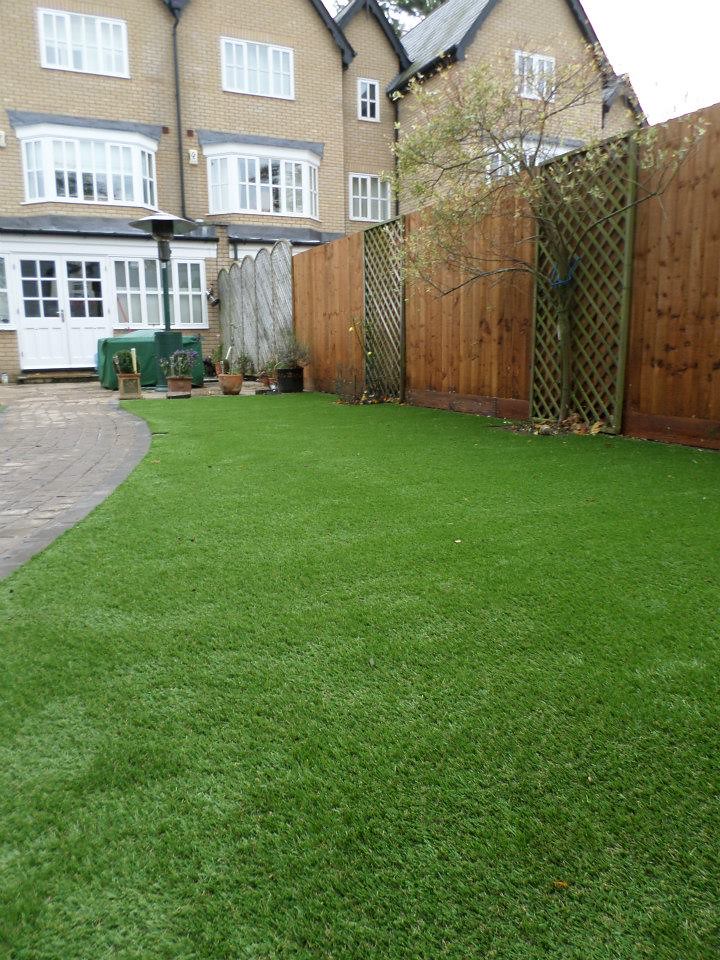
A newly installed artificial lawn. Photo: perfectgrassltd (Flickr, CC BY).
A backyard turf install costs $8 to $22 per square foot in 2026, most often $12 to $15. That puts a 500-square-foot yard around $6,000 to $7,500, a 1,000-square-foot yard near $12,000 to $15,000, and a 1,500-square-foot yard around $18,000 to $22,500 at typical rates.
Backyard turf, installed (per sq ft)
Small yards (under 400 sq ft) skew high; yards over 2,000 sq ft skew low. Figures verified July 2026.
What does backyard turf cost for my yard size?
A backyard turf install costs $8 to $22 per square foot in 2026, and most yards land at $12 to $15, verified against LawnStarter, HomeGuide, and Angi cost data in July 2026. Multiply that by your square footage and you get the real number, which for common backyards looks like this.
| Backyard size | Typical total ($12–$15/sq ft) | Full range ($8–$22/sq ft) |
|---|---|---|
| 500 sq ft | $6,000–$7,500 | $4,000–$11,000 |
| 1,000 sq ft | $12,000–$15,000 | $8,000–$22,000 |
| 1,500 sq ft | $18,000–$22,500 | $12,000–$33,000 |
Those are planning estimates, not quotes. The typical column is where a straightforward, flat, mid-range yard lands. The full range is honest about how far a small awkward job or a large premium one can drift from the middle.
Why does the per-square-foot price swing so much?
Yard size is the biggest lever, and it works in your favor as the job gets bigger. Small backyards carry the crew’s fixed costs (mobilization, minimum charges, delivery) over a tiny area, so anything under about 400 square feet skews toward $17 to $25 per foot. Large open yards over 2,000 square feet spread those same costs thin and drop toward $9 to $15. That’s why a 500-square-foot yard can feel expensive per foot while a 2,000-square-foot one feels like a relative bargain.
The second lever is what you put down. Labor is 50 to 60 percent of the installed total, per Angi’s 2026 data, and the base under the turf is what separates a lawn that drains and stays flat from one that ripples after a couple of winters. The green roll is the minority of the bill.
What’s actually inside a backyard total?
Take a 1,000-square-foot backyard at a mid-range $13 per square foot, roughly $13,000, and here’s where it goes.
| Layer | Cost per sq ft | On a 1,000 sq ft yard |
|---|---|---|
| Turf roll (material) | $2–$5 | $2,000–$5,000 |
| Base aggregate + fabric | $1.20–$2.25 | $1,200–$2,250 |
| Infill | $0.60–$1.10 | $600–$1,100 |
| Labor | $4–$9 | $4,000–$9,000 |
The layers don’t all hit their high at once, which is why a real quote lands in a band, not at the sum of every maximum. But the shape holds: labor and base together are more than half, and the turf you picked is a smaller slice than most homeowners expect.
How do you measure your backyard for turf?
Sketch the area and break it into rectangles and triangles, then add the pieces up. For a rectangle, length times width. For a triangle, half of base times height. Add about 5 to 10 percent for cuts, seams, and waste, since turf comes in fixed roll widths and you’ll trim to fit. If your yard has curves or garden beds carved out of it, measure the bounding rectangle and subtract the beds rather than trying to price a curve directly.
Once you have a square-foot number, the turf cost calculator turns it into a dollar figure using these same ranges.
What raises or lowers a backyard quote?
Beyond size, a handful of things move the number:
- Access and demo. A backyard the crew can only reach by wheelbarrow through a side gate costs more than a driveway-adjacent lawn. Tearing out old sod or a dead lawn adds $1.25 to $2 per square foot for removal.
- Turf grade. Polyethylene at $3 to $5 is the sensible backyard default. A pet-rated lawn runs $2 to $4 more per foot for heavier fibers and faster-draining backing.
- Shape. Curves, tree wells, and tight corners all add cutting and fitting time, which is labor.
- Region. Coastal metro labor rates run well above rural markets for the identical job.
- Base depth. A yard that will host heavy traffic or pets wants more base and specialty infill, a couple of dollars per foot on top.
Does a backyard turf lawn pay off?
That depends on what you’re comparing against. A turf lawn removes mowing, watering, fertilizing, and reseeding, which is the whole point of the name. In a dry climate with metered water and a lawn service, those savings add up over the 15 to 20 years a quality polyethylene lawn tends to last. In a wet climate where grass grows on rain and you mow it yourself, the math is slower and the payback is more about time than money.
Be honest about resale, too. Turf is a wash in most housing markets: buyers who want low upkeep read it as a plus, buyers who want a garden or a real lawn see something to tear out. It rarely returns its full install cost at sale, so the reason to install it is your own use of the yard, not a bet on the next owner. Price it as something you’ll enjoy, not an investment that has to pencil out.
The bottom line
For a backyard, do the arithmetic on your own footage: $12 to $15 per square foot for a normal mid-range install, closer to $18 to $22 if the yard is small or awkward, and nearer $10 to $12 if it’s large and open. A 1,000-square-foot backyard at typical rates is roughly $12,000 to $15,000 all-in. Get the turf roll price and the base-and-labor quote separately when an installer bids, because bundling them is how the real cost stays hidden. The artificial grass installation cost page has the full layer breakdown if you want to check a bid line by line.
Doing part of the backyard yourself?
As an Amazon Associate, MowFree earns from qualifying purchases. These are the specs to shop for, not tested picks - each link runs an Amazon search, and we haven't used the products it returns.
Plenty of homeowners hire the turf work but supply their own materials to shave the total. This is the material list for a backyard job, before labor.
- Search Amazon
Artificial turf roll (landscape grade)
The lawn itself. Polyethylene landscape turf is the all-round pick for a backyard.
~$2–$5 / sq ft
- Search Amazon
Class II road base / crushed aggregate
The compacted drainage layer under the turf. Budget 3–4 inches deep.
~$1.20–$2.25 / sq ft
- Search Amazon
Silica sand infill
Weighs the turf down and holds the blades up. About 1–2 lb per square foot.
~$0.60–$1.10 / sq ft
- View on Amazon
Seaming tape and turf nails
Joins roll edges and pins the perimeter. A backyard usually needs several seams.
- View on Amazon
Weed barrier fabric
Goes under the base to stop growth pushing up through the drainage layer.
A few more questions
- Do I need a permit to put turf in my backyard?
- For a ground-level residential lawn, usually no. Permits tend to come up only when the job changes drainage across a property line, sits in an HOA with turf rules, or ties into hardscape work. Check your city and HOA before you buy, since a rejected install is an expensive redo.
Sources
Each source below carries the date it was checked. Turf and labor prices drift after that date, so treat an older date as a wider range and confirm current pricing locally.
- LawnStarter: Artificial Grass Cost (2026): Installed ranges and size skew, verified 2026-07-17
- HomeGuide: Artificial Grass Cost (2026): Total-project and per-square-foot data, verified 2026-07-17
- Angi: Artificial Grass Installation Cost (2026): Labor share of total, verified 2026-07-17
- The Home Depot: Cost to Install Artificial Grass: Retail install-service pricing, verified 2026-07-17