Cost guide
Turf Installation Cost in 2026: What Crews Charge and Why
Turf installation costs $8 to $22 per square foot in 2026. This is the labor-focused breakdown: what a crew charges per phase, what's fair, and where quotes hide the real number.
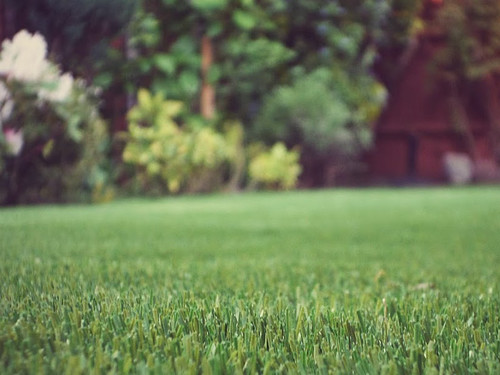
A newly installed artificial lawn. Photo: perfectgrassltd (Flickr, CC BY).
Turf installation costs $8 to $22 per square foot installed in 2026, with labor alone at $4 to $9 of that. Most homeowners pay $12 to $15 all-in. The labor covers demo, base building and compaction, seaming, and infill, which is 50 to 60 percent of a typical quote.
Turf installation (per sq ft, installed)
Labor alone is $4–$9 per sq ft. Figures verified July 2026.
What does turf installation cost?
Turf installation costs $8 to $22 per square foot in 2026. The labor portion of that, on its own, is $4 to $9 per square foot, per Angi and InstallArtificial data verified in July 2026. Most homeowners pay $12 to $15 all-in for a normal backyard.
This page starts with the labor. Here the question is narrower and more useful when you’re reading a quote: what is the crew actually charging you to do, and is it fair?
What the labor line pays for
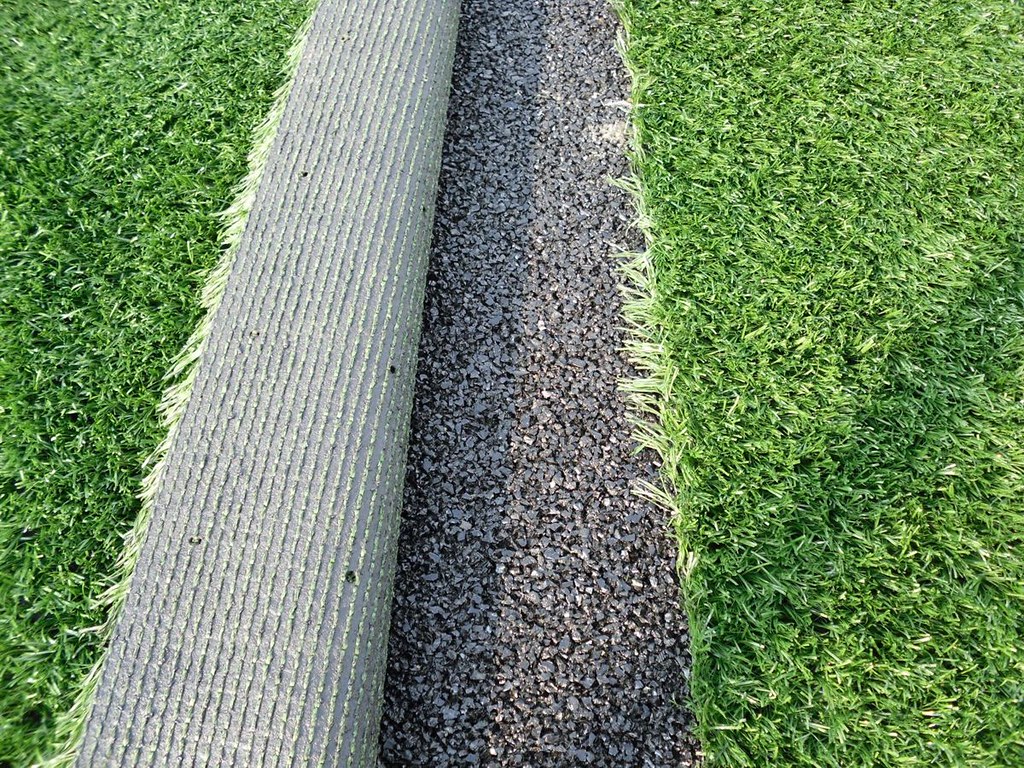
A turf crew’s day is not spent rolling out green fabric. It’s spent on the surface underneath and the finishing on top.
| Labor phase | Typical per sq ft | Why it costs |
|---|---|---|
| Demolition + haul-away | $1–$2 | Cutting and removing old sod or turf, loading a truck |
| Excavate + grade | $1–$2 | Digging down 3–4 in, shaping fall for drainage |
| Base + compaction | $1.20–$2.25 | Spreading crushed rock and hitting real density |
| Seam, stretch, nail | $2–$4 | The skilled part: invisible seams, taut turf, pinned edges |
| Infill + groom | $0.50–$1 | Spreading sand, brushing blades upright |
The seaming and stretching line is where you’re paying for a professional instead of a rental crew. A visible seam or a lawn that wrinkles in the traffic lane is the tell of labor that was rushed or underpriced.
Why the money term is the money term
“Turf installation cost” carries one of the highest advertiser bids in this whole category, and that’s a signal worth reading. It means installers compete hard for the searcher who is ready to hire. That competition is good for you: get three quotes, because in a hot market the spread between bids on the identical yard can be several dollars per square foot.
When you compare those bids, don’t compare the headline number. Compare the base depth, whether they compact, the infill they spec, and their seam warranty. A $2-per-foot-cheaper bid that skips compaction isn’t cheaper, it’s a lawn that fails in two years.

Where the range comes from
Your spot in the $8-to-$22 band is set mostly by things that have nothing to do with turf quality:
- Size. Under 400 square feet, mobilization and minimums push you toward the top. Over 2,000, you get the volume rate.
- Access. Backyard-only-through-a-gate jobs cost more than open front yards because every wheelbarrow load is time.
- Demo. Old concrete or a thick sod layer adds removal labor.
- Region. Metro labor rates run well above rural for the same work.

Why base prep is the line that matters
A turf lawn is only as good as the base under it. Crews excavate several inches, lay crushed aggregate, then compact it to real density with a plate compactor. That compacted layer is what drains water away and keeps the surface flat under foot traffic.
Cut this corner and the failures are predictable: puddles after rain, ripples where people walk, and a spongy feel underfoot. When an installer’s bid seems cheap, the base is almost always where they saved money. Ask any bidder how deep the base goes and whether they compact it. The answer tells you more about the quote than the turf brand does.
Turf over soil vs. over concrete
Two common installs, two different labor stories, similar totals:
- Over soil is the standard yard install. The labor is in the excavation and base build.
- Over concrete (patios, balconies, rooftops) skips the dig but adds a drainage pad and a glue-down step. It isn’t automatically cheaper because the prep just moves from the shovel to the adhesive.
Either way, the surface under the turf is doing the work, and preparing it is the labor you’re paying for.
Should you install it yourself?
You can, and it changes the math. Buy the rolls, base, infill, seam tape, and nails and you’re looking at roughly $4.50 to $9 per square foot in materials, before your own time. That’s the labor half of a pro job staying in your pocket.
The honest trade-off: base prep and seaming are the hard parts, and they’re exactly the parts that ruin a lawn when done wrong. A flat, small, rectangular area with good access is a reasonable weekend DIY. A large yard with curves, slopes, or drainage problems is where a pro earns the labor line. If you go DIY, the material list in the rail below is the whole kit.
What about removing the old lawn first?
If there’s existing turf or sod to pull, budget $1.25 to $2 per square foot for removal on top of the install. That covers peeling the old surface, hauling the backing and infill, and grading down to clean soil. We break that down on the turf removal cost page.
Why does the per-foot price drop as the yard gets bigger?
Because a chunk of every install is fixed, no matter how small the area. The crew still has to load the truck, drive out, set up, and hit a job minimum. Spread those fixed costs over 300 square feet and they land heavy per foot. Spread them over 2,500 square feet and they nearly vanish.
This is the most useful thing to understand before you read a quote. The per-foot number on a small job is not the installer gouging you; it’s arithmetic. The same crew, the same truck, and the same job minimum have to be covered whether they surface 300 feet or 3,000, and that fixed cost only disappears when there’s more area to carry it.
| Yard size | Typical installed cost / sq ft | Why |
|---|---|---|
| Under 400 sq ft | $17–$25 | Minimums and mobilization spread over a tiny area |
| 400–1,000 sq ft | $13–$18 | The common residential middle |
| 1,000–2,000 sq ft | $11–$15 | Fixed costs thinning out |
| Over 2,000 sq ft | $9–$15 | Volume pricing, crew stays efficient all day |
So a 300-square-foot side yard and a 2,500-square-foot backyard can use the identical turf and still price $8 or more apart per foot. Same blades, different math.
How to lower the labor bill
The labor is the half you can attack:
- Do your own demo. Pull the old lawn with a rented sod cutter and you’ve removed the cheapest, easiest labor from the crew’s total.
- Build your own base. Base materials are inexpensive; compaction is effort, not expertise. Some installers will lay turf on a base you prepped.
- Bundle and simplify. One bigger rectangular area beats several small curved ones for per-foot labor.
To size your specific yard, the calculator does the arithmetic.
Cut the labor line: prep it yourself
As an Amazon Associate, MowFree earns from qualifying purchases. These are the specs to shop for, not tested picks - each link runs an Amazon search, and we haven't used the products it returns.
The fastest way to shrink a turf installation quote is to take the demo and base prep off the crew's plate. Here's the gear.
- Search Amazon
Turf cutter / sod remover
Pulls up old lawn fast so you're not paying a crew for the easy part.
- Search Amazon
Crushed base aggregate
The compacted drainage layer. 3–4 inches deep under the whole area.
~$1.20–$2.25 / sq ft
- Search Amazon
Plate compactor (rental adjunct)
Real base density needs a plate compactor, not a foot stomp.
- View on Amazon
Turf nails / spikes
Pin the perimeter and seams. Galvanized so they don't rust and stain.
A few more questions
- Do installers charge by the square foot or by the project?
- Most quote a per-square-foot rate that already blends turf, base, and labor, then add line items for demo, haul-away, and access difficulty. Ask for the turf and the labor split separately so you can compare bids honestly.
- Is there a minimum charge for small turf jobs?
- Usually yes. Crews have a mobilization and minimum cost, often $1,500 to $3,000, so a 150-square-foot job can land at $20-plus per square foot even though the turf is cheap. Small jobs are where per-foot pricing looks worst.
Sources
Each source below carries the date it was checked. Turf and labor prices drift after that date, so treat an older date as a wider range and confirm current pricing locally.
- Angi: Artificial Grass Installation Cost (2026): Labor share of installed cost, verified 2026-07-17
- InstallArtificial: Artificial Grass Installation Cost (2026): Per-phase labor pricing, verified 2026-07-17
- The Home Depot: Cost to Install Artificial Grass: Retail install-service rates, verified 2026-07-17
- HomeGuide: Artificial Grass Cost (2026): Base and labor breakdown, verified 2026-07-17
- LawnStarter: Artificial Grass Cost (2026): Installed and materials-only ranges, verified 2026-07-17